
 Image 1 of 2
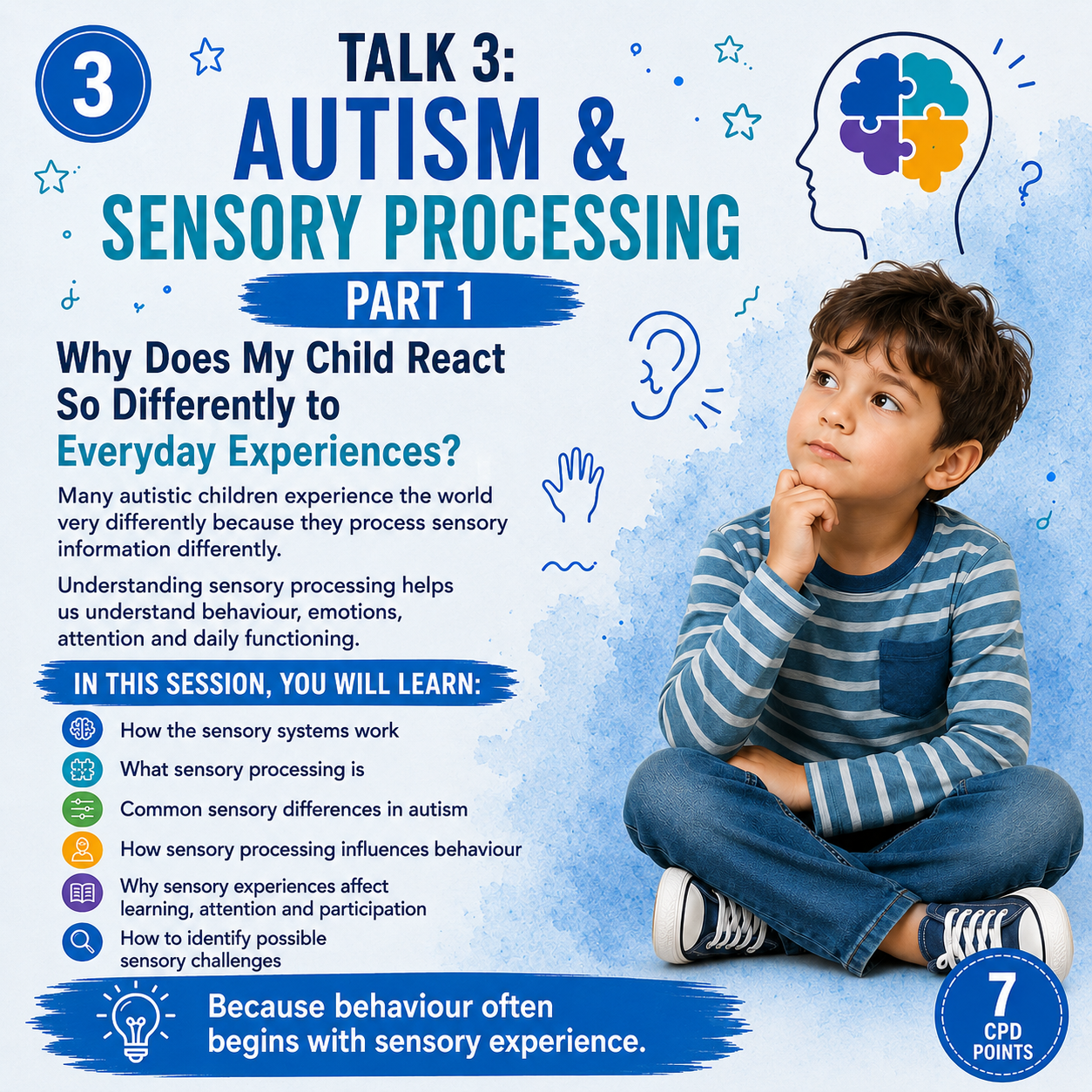 Image 2 of 2
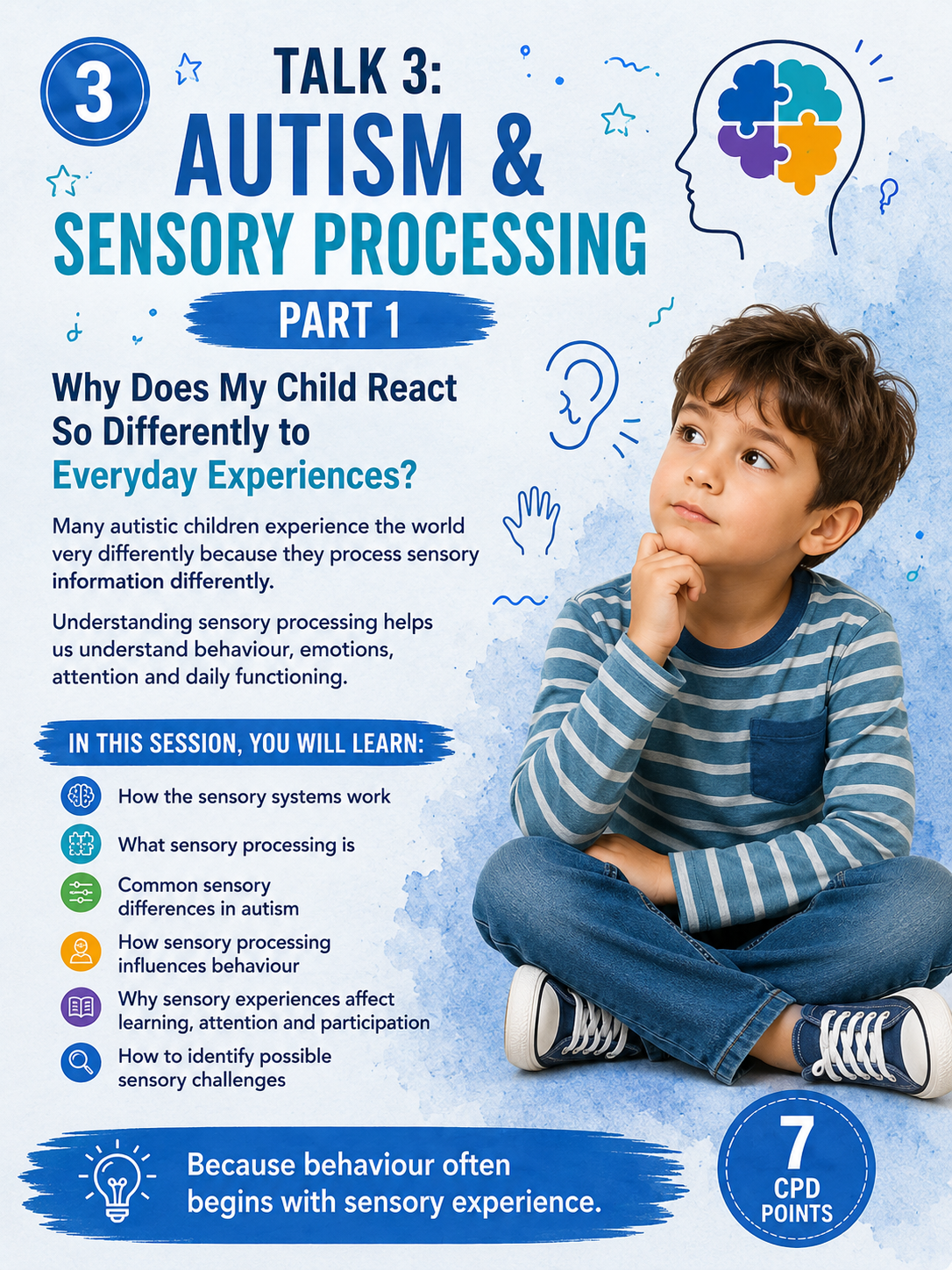
TALK 3: AUTISM & SENSORY PROCESSING – PART 1
Why Does My Child React So Differently to Everyday Experiences?
Many autistic children experience the world very differently because they process sensory information differently. Sounds that seem ordinary to one person may feel overwhelming to another. Certain textures may be intolerable. Some children constantly seek movement and sensory input, while others become easily overwhelmed and withdrawn.
In this session, we explore the sensory systems and how sensory processing differences influence behaviour, emotions, attention, participation and daily functioning. Participants will gain a deeper understanding of why sensory experiences have such a profound impact on autistic children and how these experiences influence their ability to engage with the world.
This talk provides the foundation for understanding many behaviours that are often
misunderstood or misinterpreted.
In this session, you will learn:
• How the sensory systems work
• What sensory processing is
• Common sensory differences in autism
• How sensory processing influences behaviour
• Why sensory experiences affect learning, attention and participation
• How to identify possible sensory challenges
Because behaviour often begins with sensory experience.
TALK 3: AUTISM & SENSORY PROCESSING – PART 1
Why Does My Child React So Differently to Everyday Experiences?
Many autistic children experience the world very differently because they process sensory information differently. Sounds that seem ordinary to one person may feel overwhelming to another. Certain textures may be intolerable. Some children constantly seek movement and sensory input, while others become easily overwhelmed and withdrawn.
In this session, we explore the sensory systems and how sensory processing differences influence behaviour, emotions, attention, participation and daily functioning. Participants will gain a deeper understanding of why sensory experiences have such a profound impact on autistic children and how these experiences influence their ability to engage with the world.
This talk provides the foundation for understanding many behaviours that are often
misunderstood or misinterpreted.
In this session, you will learn:
• How the sensory systems work
• What sensory processing is
• Common sensory differences in autism
• How sensory processing influences behaviour
• Why sensory experiences affect learning, attention and participation
• How to identify possible sensory challenges
Because behaviour often begins with sensory experience.