
 Image 1 of 2
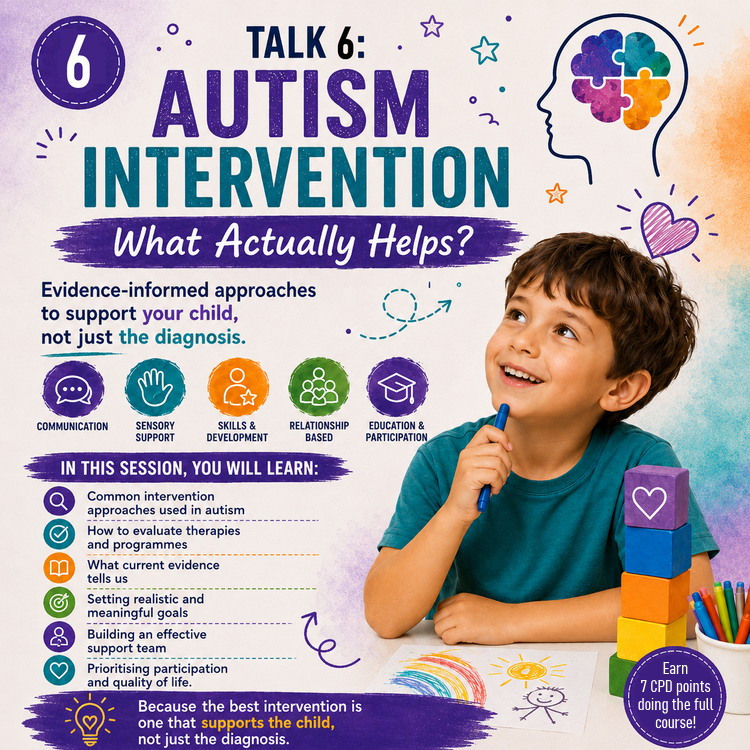 Image 2 of 2
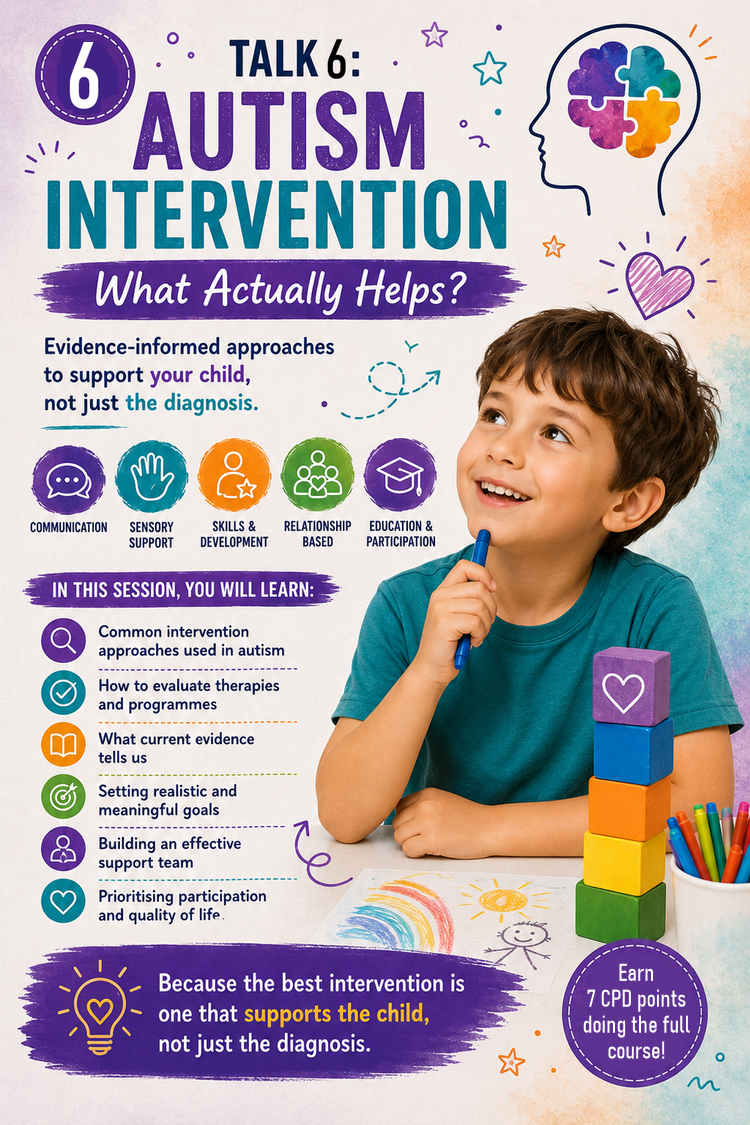
TALK 6: AUTISM INTERVENTION
What Actually Helps?
One of the most common questions families ask after receiving an autism diagnosis is:
“What should we do now?”
With so many therapies, programmes and interventions available, it can be difficult to know where to begin.
This session provides an evidence-informed overview of intervention approaches commonly used with autistic children. We discuss developmental, sensory, communication, educational and relationship-based approaches while exploring how to evaluate interventions critically and make informed decisions.
Participants will learn how to identify meaningful goals, prioritise quality of life and build a support team that meets the unique needs of their child.
The focus is not on finding a cure or changing who a child is, but on helping autistic children participate more fully and successfully in everyday life.
In this session, you will learn:
• Common intervention approaches used in autism
• How to evaluate therapies and programs
• What current evidence tells us
• Setting realistic and meaningful goals
• Building an effective support team
• Prioritising participation and quality of life
Because the best intervention is one that supports the child, not just the diagnosis.
TALK 6: AUTISM INTERVENTION
What Actually Helps?
One of the most common questions families ask after receiving an autism diagnosis is:
“What should we do now?”
With so many therapies, programmes and interventions available, it can be difficult to know where to begin.
This session provides an evidence-informed overview of intervention approaches commonly used with autistic children. We discuss developmental, sensory, communication, educational and relationship-based approaches while exploring how to evaluate interventions critically and make informed decisions.
Participants will learn how to identify meaningful goals, prioritise quality of life and build a support team that meets the unique needs of their child.
The focus is not on finding a cure or changing who a child is, but on helping autistic children participate more fully and successfully in everyday life.
In this session, you will learn:
• Common intervention approaches used in autism
• How to evaluate therapies and programs
• What current evidence tells us
• Setting realistic and meaningful goals
• Building an effective support team
• Prioritising participation and quality of life
Because the best intervention is one that supports the child, not just the diagnosis.