
 Image 1 of 2
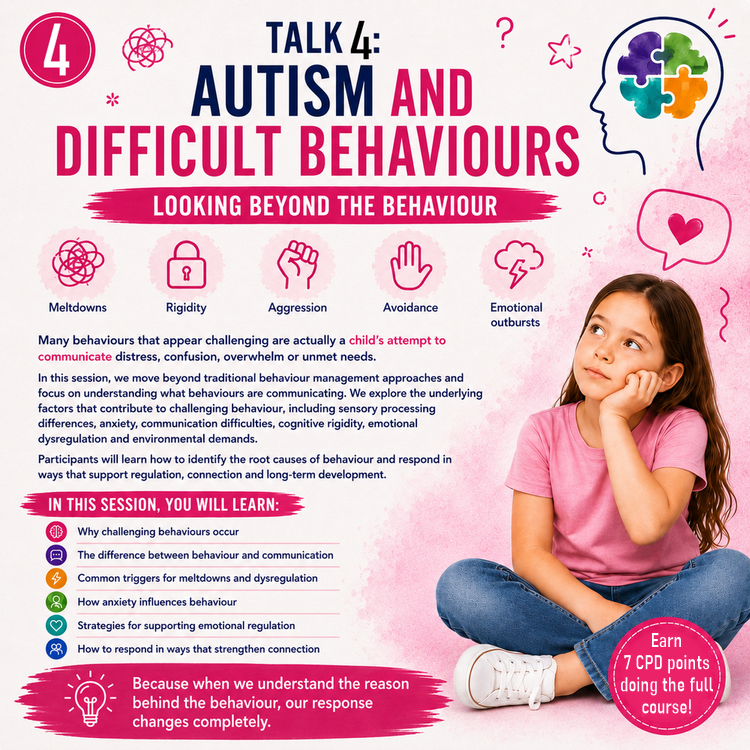 Image 2 of 2
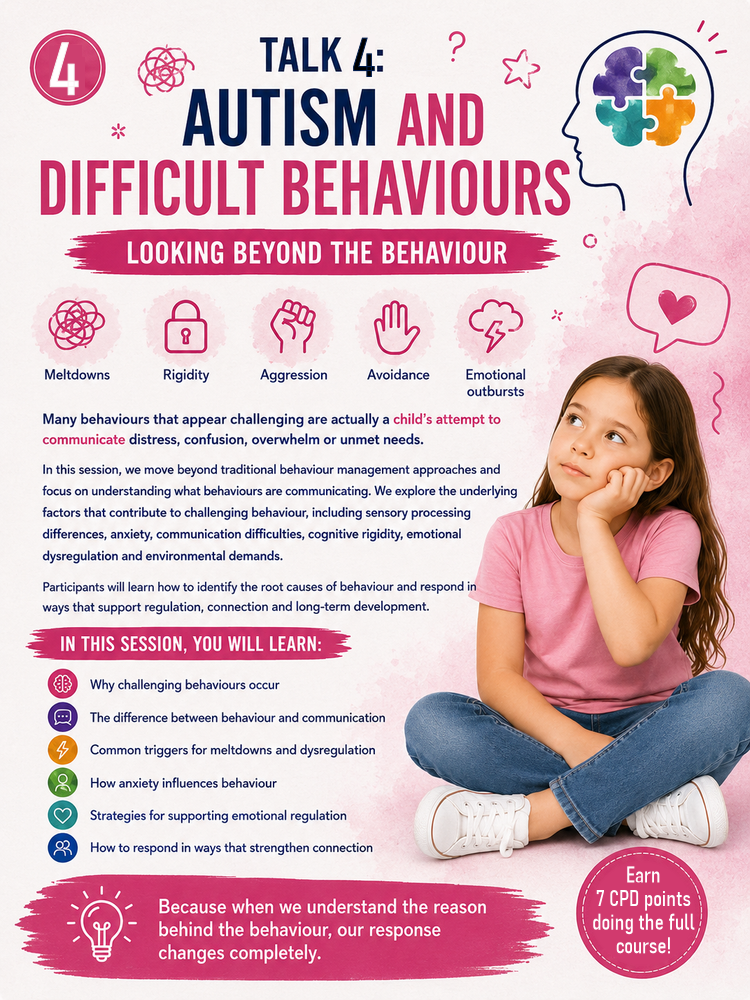
TALK 4: AUTISM AND DIFFICULT BEHAVIOURS
Looking Beyond the Behaviour: Meltdowns. Rigidity. Aggression. Avoidance. Emotional outbursts.
Many behaviours that appear challenging are actually a child's attempt to communicate distress, confusion, overwhelm or unmet needs.
In this session, we move beyond traditional behaviour management approaches and focus on understanding what behaviours are communicating. We explore the underlying factors that contribute to challenging behaviour, including sensory processing differences, anxiety, communication difficulties, cognitive rigidity, emotional dysregulation and environmental demands.
Participants will learn how to identify the root causes of behaviour and respond in ways that support regulation, connection and long-term development.
In this session, you will learn:
• Why challenging behaviours occur
• The difference between behaviour and communication
• Common triggers for meltdowns and dysregulation
• How anxiety influences behaviour
• Strategies for supporting emotional regulation
• How to respond in ways that strengthen connection
Because when we understand the reason behind the behaviour, our response changes
completely.
TALK 4: AUTISM AND DIFFICULT BEHAVIOURS
Looking Beyond the Behaviour: Meltdowns. Rigidity. Aggression. Avoidance. Emotional outbursts.
Many behaviours that appear challenging are actually a child's attempt to communicate distress, confusion, overwhelm or unmet needs.
In this session, we move beyond traditional behaviour management approaches and focus on understanding what behaviours are communicating. We explore the underlying factors that contribute to challenging behaviour, including sensory processing differences, anxiety, communication difficulties, cognitive rigidity, emotional dysregulation and environmental demands.
Participants will learn how to identify the root causes of behaviour and respond in ways that support regulation, connection and long-term development.
In this session, you will learn:
• Why challenging behaviours occur
• The difference between behaviour and communication
• Common triggers for meltdowns and dysregulation
• How anxiety influences behaviour
• Strategies for supporting emotional regulation
• How to respond in ways that strengthen connection
Because when we understand the reason behind the behaviour, our response changes
completely.