
 Image 1 of 2
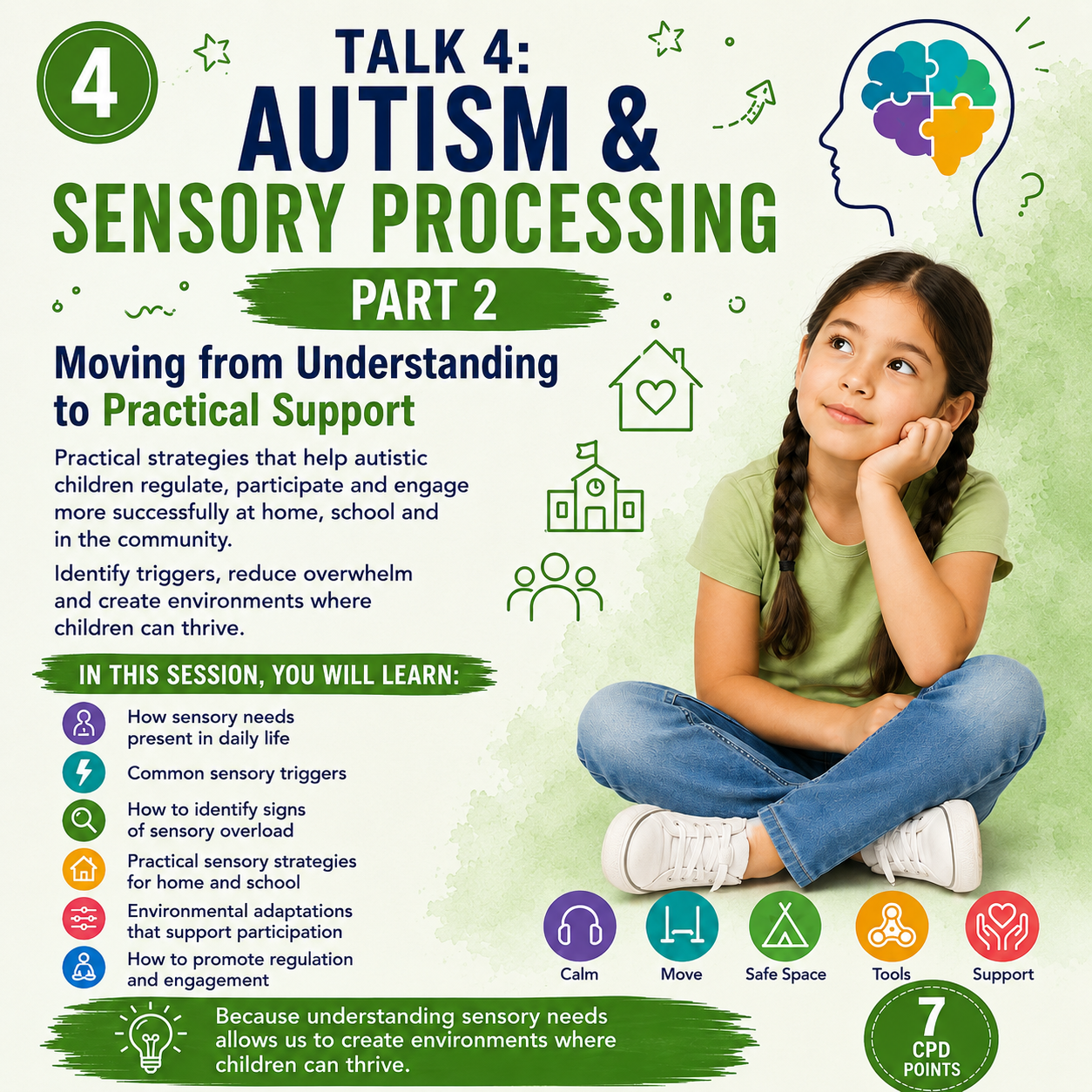 Image 2 of 2
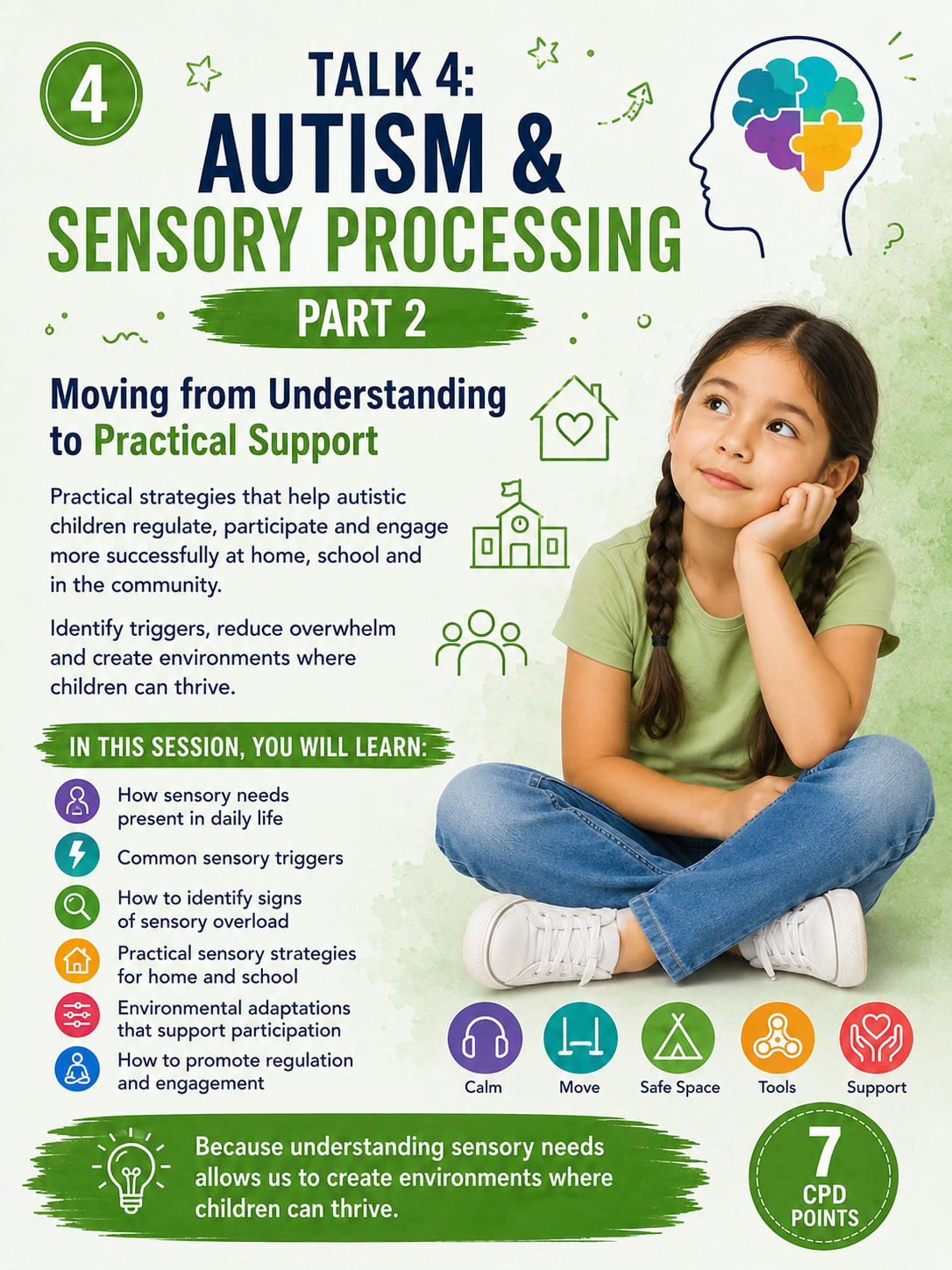
TALK 4: AUTISM & SENSORY PROCESSING – PART 2
Moving from Understanding to Practical Support
Once we understand sensory processing, the next step is learning how to support sensory needs in everyday life. Building on the concepts introduced in Part 1, this session focuses on practical strategies that can help autistic children regulate, participate and engage more successfully at home, school and in the community.
We explore how sensory needs may present differently across environments and discuss ways to reduce sensory overwhelm while creating opportunities for successful participation.
Participants will learn how to identify sensory triggers, recognise signs of dysregulation and make meaningful environmental adaptations.
The goal is not to eliminate sensory differences, but rather to support children in navigating their sensory world more successfully.
In this session, you will learn:
• How sensory needs present in daily life
• Common sensory triggers
• How to identify signs of sensory overload
• Practical sensory strategies for home and school
• Environmental adaptations that support participation
• How to promote regulation and engagement
Because understanding sensory needs allows us to create environments where children can thrive.
TALK 4: AUTISM & SENSORY PROCESSING – PART 2
Moving from Understanding to Practical Support
Once we understand sensory processing, the next step is learning how to support sensory needs in everyday life. Building on the concepts introduced in Part 1, this session focuses on practical strategies that can help autistic children regulate, participate and engage more successfully at home, school and in the community.
We explore how sensory needs may present differently across environments and discuss ways to reduce sensory overwhelm while creating opportunities for successful participation.
Participants will learn how to identify sensory triggers, recognise signs of dysregulation and make meaningful environmental adaptations.
The goal is not to eliminate sensory differences, but rather to support children in navigating their sensory world more successfully.
In this session, you will learn:
• How sensory needs present in daily life
• Common sensory triggers
• How to identify signs of sensory overload
• Practical sensory strategies for home and school
• Environmental adaptations that support participation
• How to promote regulation and engagement
Because understanding sensory needs allows us to create environments where children can thrive.